

Imagine a steaming bowl of Minestrone Soup, where vibrant colors dance in harmony and the aroma of fresh herbs wafts through the air, enticing your senses with every spoonful. As you dive into this hearty Italian delight, the rich flavors of garden-fresh vegetables meld with tender pasta and protein-packed beans, creating a warm embrace that wraps around you like a cozy blanket on a chilly day.
Minestrone Soup is not just a dish; it’s an invitation to gather around the table, sharing laughter and stories while savoring each nourishing bite. Whether it’s a rainy afternoon or a family gathering, this comforting soup promises to elevate any occasion with its delightful medley of textures and tastes, ensuring that every spoonful brings joy and satisfaction.
Why Is Minestrone Soup So Irresistibly Good?
Packed with vibrant vegetables like carrots, zucchini, and spinach, this soup is a feast for the eyes and the palate. Rich in protein from kidney and cannellini beans, it’s a filling option that doesn’t skimp on nutrition. Quick to prepare, with just 15 minutes of prep and 30 minutes of cooking, it’s perfect for busy weeknights. Versatile by nature, you can easily swap in your favorite veggies or pasta shapes. A crowd-pleaser, it warms hearts and homes, making it a dish you’ll want to share!
Minestrone Soup Ingredients
For the Vegetables
- 1 cup carrots (diced) – Adds a touch of sweetness and vibrant color to your Minestrone Soup.
- 1 cup celery (diced) – Provides a crisp texture and essential flavor base for the soup.
- 1 cup zucchini (diced) – Contributes a mild taste and tender bite, perfect for soaking up the broth.
- 1 cup green beans (cut into pieces) – Brings a fresh crunch and beautiful green hue to the mix.
- 1 cup spinach (fresh) – Offers a nutritious boost and lovely color while wilting perfectly into the soup.
For the Legumes
- 1 can kidney beans (drained and rinsed) – Adds protein and heartiness, making your soup more filling.
- 1 can cannellini beans (drained and rinsed) – Provides creamy texture and additional protein for a balanced meal.
For the Pasta
- 1 cup small pasta (such as ditalini or elbow) – Absorbs flavors beautifully while adding bulk to your Minestrone Soup.
For the Liquids
- 6 cups vegetable broth – The flavorful base that brings all the ingredients together in harmony.
- 1 can diced tomatoes (with juices) – Enhances the soup with acidity, sweetness, and rich tomato flavor.
For the Herbs and Spices
- 2 teaspoons Italian seasoning – A fragrant blend that infuses your soup with classic Italian flavors.
- 1 teaspoon salt (to taste) – Enhances all other flavors; adjust according to your preference.
- 1 teaspoon black pepper (to taste) – Adds warmth and depth; feel free to increase for extra spice!
How to Make Minestrone Soup
1. Chop vegetables – Dice 1 cup each of carrots, celery, and zucchini, and cut green beans into pieces. Set aside these vibrant veggies that will bring color and nutrition to your soup.
2. Prepare beans – Open the cans of kidney and cannellini beans, then drain and rinse them under cold water. This step ensures they’re ready to add creamy goodness to your hearty Minestrone Soup.
3. Heat oil – In a large pot, heat a drizzle of oil over medium heat. This will create a perfect base for sautéing those delicious veggies.
4. Sauté veggies – Add your chopped carrots, celery, zucchini, and green beans to the pot. Sauté for about 5 minutes until they soften and release their delightful aromas.
5. Add liquids – Stir in the can of diced tomatoes (with juices) and 6 cups of vegetable broth along with 2 teaspoons of Italian seasoning. Bring this medley to a boil, letting the flavors meld beautifully.
6. Simmer soup – Once boiling, reduce the heat and let it simmer for 20 minutes. This allows all the ingredients to come together and develop rich flavors.
7. Incorporate pasta and beans – Add the rinsed kidney beans, cannellini beans, and 1 cup of small pasta (like ditalini or elbow) to the pot. Cook until the pasta is tender, soaking up all that savory goodness.
8. Season before serving – Taste your creation! Season with salt and black pepper as needed before serving warm bowls of this wholesome delight.
Optional: Top with fresh basil for an extra burst of flavor!
Exact quantities are listed in the recipe card below.
Tips for the Best Minestrone Soup
- Fresh Ingredients: Use fresh, in-season vegetables for the best flavor and nutrition. Frozen veggies can be a good backup but may alter the texture.
- Sautéing Time: Don’t rush the sautéing process! Allow your vegetables to soften and caramelize slightly—this enhances the soup’s depth of flavor.
- Pasta Perfection: Add pasta towards the end of cooking to prevent it from becoming mushy. Cook just until al dente for that perfect bite in your Minestrone Soup.
- Season Gradually: Taste your soup as you go, especially after adding beans and pasta. Adjust salt and pepper gradually to achieve a balanced flavor without overwhelming the dish.
- Beans Matter: Rinse your canned beans thoroughly to remove excess sodium and improve their texture. This small step makes a big difference in your Minestrone Soup!
How to Store and Freeze Minestrone Soup
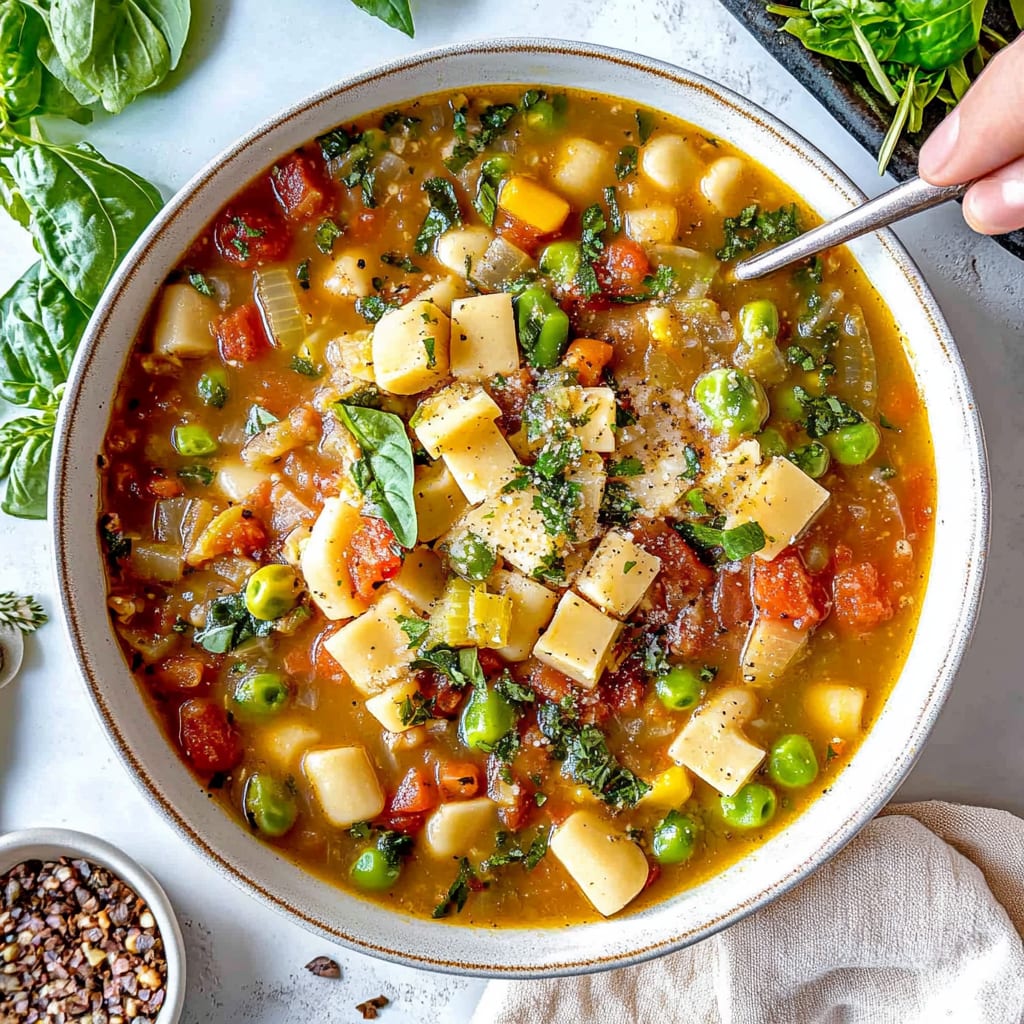
- Fridge: Store leftover Minestrone Soup in an airtight container for up to 3 days. Allow it to cool before sealing to maintain freshness.
- Freezer: Freeze Minestrone Soup in freezer-safe containers for up to 3 months. Leave some space at the top for expansion.
- Reheating: Thaw overnight in the fridge, then reheat on the stovetop over medium heat until warmed through, adding a splash of broth if needed.
- Avoiding Spoilage: Keep any additional fresh herbs or dairy toppings separate until serving to prevent spoilage and maintain flavor.
Minestrone Soup Your Way
Feel free to get creative with this comforting dish, allowing your personal touch to shine through each bowl.
- Seasonal Veggies: Swap in seasonal produce like butternut squash or corn for a unique twist that celebrates fresh flavors. Each season brings something different; let the ingredients inspire your soup creation!
- Protein Boost: Add cooked chicken or turkey for extra heartiness, transforming your soup into a filling meal. This addition not only enhances the flavor but also makes it a delightful one-pot wonder.
- Gluten-Free: Use gluten-free pasta alternatives like quinoa or chickpea pasta to make this dish accessible to everyone. It’s an easy swap that maintains the soul of this beloved recipe without sacrificing taste.
- Spicy Kick: Toss in some red pepper flakes or diced jalapeños to elevate the heat level, perfect for those who crave a little spice. Feel free to adjust the amount based on your preferred heat intensity—every spoonful can be an adventure!
- Herb Variations: Try using fresh herbs like basil or parsley instead of Italian seasoning for a garden-fresh flavor. These herbs add brightness and complexity, elevating your soup into something extraordinary.
- Creamy Addition: Stir in a splash of cream or coconut milk at the end for a rich and velvety texture. This twist adds a luxurious mouthfeel, making each bowl feel indulgent and satisfying.
- Savory Umami: Incorporate Parmesan rind while simmering for an extra depth of flavor. Just remember to remove it before serving—it’s a simple trick that transforms your broth into something special!
Make Ahead Options
Minestrone Soup is an exceptional choice for meal prep, allowing you to savor its rich flavors throughout the week. You can chop all your vegetables—1 cup each of diced carrots, celery, zucchini, and green beans—and even set aside 1 cup of fresh spinach up to 24 hours in advance. Additionally, drain and rinse 1 can each of kidney and cannellini beans ahead of time. For cooking, simply heat oil in your pot, sauté the prepared vegetables for about 5 minutes, then mix in the diced tomatoes, vegetable broth, and Italian seasoning. Let it simmer for 20 minutes before adding the beans and 1 cup of small pasta, cooking until tender. This hearty Minestrone Soup will stay fresh in the fridge for up to 3 days; just remember to season with salt and pepper to taste when ready to serve!
Minestrone Soup Recipe FAQs
How can I choose the best vegetables for my minestrone soup?
When selecting vegetables, aim for a vibrant mix that offers both flavor and nutrition. Fresh carrots, celery, zucchini, green beans, and spinach all work beautifully together. Feel free to swap in seasonal vegetables like bell peppers or peas for added variety! Remember, the key is to chop them into uniform pieces (about 1 cup each), so they cook evenly in just 5 minutes of sautéing.
What’s the best way to store leftover minestrone soup?
To keep your minestrone soup fresh, let it cool completely before transferring it to an airtight container. Properly stored, it will last in the fridge for up to 3–4 days. If you anticipate having leftovers beyond that timeframe, consider freezing it for up to 3 months. Just be sure to leave some space in the container since liquids expand when frozen!
Can I make minestrone soup vegetarian or vegan-friendly?
Absolutely! This minestrone soup is already vegetarian since it uses vegetable broth. To make it vegan, simply ensure that any pasta you use is egg-free (most small pasta like ditalini or elbow macaroni is). The beans add a hearty protein punch, making this a nutritious option for everyone.
What if my pasta gets overcooked in the soup?
If you find yourself with mushy pasta after cooking (which can happen if you leave it in too long), try adding a bit more vegetable broth to balance the texture. In the future, consider adding the pasta during the last 10 minutes of cooking time—this helps ensure it’s perfectly al dente when you serve your delicious minestrone!
How many servings does this recipe yield?
This recipe yields about 4 hearty servings, perfect for enjoying with family or friends! Each bowl packs a nutritional punch at around 250 calories per serving. If you’re feeding a crowd or want leftovers for meal prep, feel free to double the ingredients—just adjust your pot size accordingly.
What are some tasty toppings for serving minestrone soup?
To elevate your minestrone experience, try garnishing each bowl with freshly grated Parmesan cheese or a sprinkle of fresh herbs like basil or parsley. A drizzle of good olive oil adds richness and flavor too! You could even serve it alongside crusty bread for dipping—a delightful way to soak up every savory sip!